

Climate Experts · Garage heaters
A garage you can use through the colder months.
Your garage may be where you work on projects, keep tools ready or spend time doing something you enjoy. When the temperature makes that space uncomfortable, a properly planned heater can make it more useful. Climate Experts helps you compare gas, radiant tube, electric and hydronic garage-heating options around the space, how you use it and the connections available in your home.
- Locally owned since 2012
- Emergency service within 24 hours
- Financing available
Get your free quote
Share a few details about your home. We will arrange an assessment and a clear, written quote.
Prefer to talk?
905-492-7171
Radiant tube heaters for suitable garages & workshops.
If you spend time working in your garage, radiant tube heating is another option worth discussing. A ceiling-mounted tube heater transfers radiant heat toward people, vehicles and surfaces in its coverage area. This can suit certain taller garages and light commercial workshops where the installation provides the manufacturer’s required clearances.
Climate Experts compares radiant tube heaters with forced-air gas heaters, electric heaters and hydronic options around your actual space. We review the ceiling height, intended use, available gas supply, venting, combustion air and clearance to vehicles, storage and other materials. The selected heater must be approved for the intended residential or commercial application; a workshop model is not automatically suitable for every home garage.
We can discuss radiant tube heater installation, replacement, service and maintenance. The sizing tool on this page estimates the space’s heating demand; it does not select a tube layout or confirm mounting clearances. Our proposal sets out the chosen equipment and installation scope before you proceed.
Start with what you want your garage to do.
A garage used for parking has different comfort priorities from a workshop where you spend several hours at a time. Tell us whether you want steady background heat or a warmer space while you work, how often the doors open and what equipment or storage shares the room. Those details help us recommend an arrangement that fits the way you use the space.
Climate Experts has served our community from Pickering since 2012. Our local team brings experience with gas heating, electrical heating options and hydronic systems to the conversation. We look at the heater and its installation together, explain the proposed work and take pride in the details that make the finished system practical to use.
Get a clear, written quote for your garage heater.
Free in-home assessment · Financing available through Financeit · Ask us about current rebates and manufacturer offers.
Gas, radiant tube, electric or hydronic: compare the complete installation.
Each option can provide useful garage heating in an appropriate installation. The best choice depends on the heat needed, the available supply, the work required and the cost of operation. A compact heater may look straightforward, but the connections and placement still need careful review.
| Option | Where the heat comes from | What we review |
|---|---|---|
| Gas unit heater | A gas burner supplies heat; a fan distributes warm air. | Gas supply, approved venting and combustion-air arrangement, electrical connection, placement and clearances. |
| Gas radiant tube heater | A gas burner heats an overhead tube, which radiates heat toward people, vehicles and surfaces below. | Ceiling height, heat loss, gas supply, approved venting and combustion air, coverage, mounting and manufacturer clearances to vehicles and stored materials. |
| Electric unit heater | Electric resistance elements supply heat; a fan distributes it. | Required heat output, electrical load and circuits, operating cost, placement and clearances. |
| Hydronic unit heater | Hot water from a suitable heat source passes through a coil; a fan moves air across it. | Available boiler or compatible heat-source capacity, water temperature, piping, circulation, controls and freeze protection. |
We discuss the selected equipment and accessories in your proposal. Manufacturer names are secondary to choosing a suitable system and completing the work with care; catalogue examples are not a claim that every model is in stock.
Gas garage heaters: equipment, supply & venting together.
A gas unit heater can be an option where the supply and installation arrangement suit the garage. We review the proposed location, the gas piping needed for the selected appliance, vent routing and the required combustion-air arrangement. An existing gas line nearby does not automatically mean it can support the additional equipment.
Supply & connection
Consider the selected heater and the other appliances served by the property’s gas piping before confirming the connection work.
Venting & air arrangement
Follow the selected model’s installation requirements. The available route and termination are considered as part of the proposal.
A practical mounting position
Review door travel, storage, access and manufacturer-required clearances before settling on a location.
If you are replacing an older gas garage heater, we assess what can be retained and what needs to change. Similar appearance or capacity does not establish that the old vent, connection or mounting arrangement is suitable for the replacement.
Electric garage heaters: an option without a gas connection.
An electric unit heater uses resistance elements to heat air. It does not need a gas supply or combustion exhaust vent for its own operation, which can make it an option worth comparing where those connections would be difficult or where you prefer an electric arrangement.
The electrical supply still has to support the selected equipment. We review the proposed heating load and identify the electrical coordination required. A qualified assessment determines circuit and service requirements; a spare breaker space or existing receptacle does not, on its own, confirm suitability.
We also discuss how often you expect to heat the garage and the temperature you want to maintain. Electric resistance heating and heat-pump heating have different performance characteristics, and electricity use can be significant in a poorly insulated space. Installation price and operating cost should both be part of the decision.
Hydronic garage heaters: use a suitable water-based heat source.
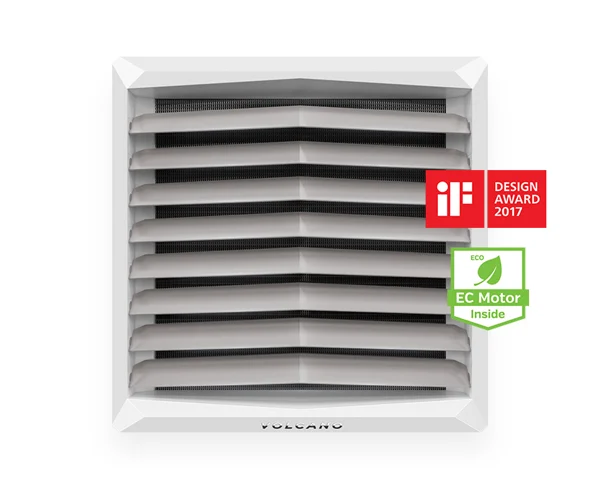
A hydronic unit heater contains a hot-water coil and fan. Heat is supplied by a suitable boiler or compatible hydronic heat source rather than a burner inside the garage heater. That gives us another option to review for a home with a water-based heating system.
The existing heat source needs enough available capacity for the garage’s demand. Coil output also depends on water temperature, water flow and the air passing through it. We review these conditions together instead of selecting a unit from its highest catalogue output alone.
Heat source & output
Confirm the additional load and the unit’s output at the actual operating water temperatures.
Piping & controls
Plan the pipe route, circulation and control arrangement so the garage operates as intended alongside the rest of the system.
Cold-space protection
Review the potential for freezing and appropriate protection for the selected installation, including what happens if heat or power is interrupted.
There is no combustion vent at the hydronic unit heater itself. The boiler or other heat source may still have its own venting, fuel and electrical requirements. Where an electric boiler or air-to-water heat pump is proposed, the garage’s load and emitter suitability are part of that wider review.
For a broader renovation, hydronic radiant in-floor heating may be another approach to discuss. It is a different installation from a fan-assisted unit heater, and its floor construction, controls and response should be considered early in the work.
Garage-heater sizing: more than the number of cars.
Two garages with the same floor area can need different heating capacity. Ceiling height, exposed walls, insulation, garage-door construction and air leakage all affect heat loss. The desired indoor temperature and local winter conditions matter too. A one-, two- or three-car description is a starting point for questions, not the final sizing method.
Dimensions & construction
Review floor area, ceiling height, exposed surfaces and whether the garage is attached or detached.
Insulation & doors
Consider walls, ceiling, windows, door condition and how often the large doors open during use.
Your comfort target
Discuss background heat versus workshop comfort, operating hours and how quickly you want the space to warm.
Available heater output
Match the requirement to the selected equipment’s delivered output. Gas input, electric capacity and hydronic output are not interchangeable ratings.
A bigger heater is not automatically a better solution. We review suitable capacity, air delivery and controls so the arrangement fits the space. If insulation or door improvements would materially affect the heating requirement, we discuss that before treating more equipment as the answer.
PLAN YOUR GARAGE HEATING
How much heat could your garage need?
Enter a few details to explore how size, insulation and your preferred temperature affect heating demand. Approximate measurements are fine for this first conversation.
Preliminary estimate: this calculates above-ground heat loss with the doors closed. Slab/ground losses and warm-up after opening the garage door need a separate assessment before we select a heater.
Estimated heat needed at your chosen temperatures
This is delivered heat, not a heater’s gas-input rating. We still assess the slab, door-opening recovery, construction and available connections before confirming equipment size.
See the heat-loss breakdown
Surface loss = effective U-value × exposed area × temperature difference. Air loss = 0.018 × natural air changes/hour × volume (ft³) × temperature difference (°F), converted to watts. No automatic oversizing allowance is added. Shared surfaces next to warmer heated rooms are excluded; irregular layouts and colder adjoining spaces need individual review.
Your measurements are calculated on this page. They are not sent to us automatically.
Placement that works around your garage.
The heater needs to fit around door tracks, vehicles, work areas and storage while maintaining the selected model’s clearances and service access. We also consider where warm air is directed and where the thermostat can sense a useful room temperature. Photos of the ceiling, door hardware and proposed work area can help us prepare for your enquiry.
Heating does not replace appropriate ventilation or make it safe to run a vehicle in an enclosed garage. The heater is selected for the agreed use of the space and its installation requirements; changing that use should be reviewed separately.
Controls that suit the way you use the space.
Some homeowners want the garage kept at a steady background temperature. Others use it for projects on selected evenings or weekends. We discuss your routine and choose compatible controls so you understand how the heater will operate and how to adjust it.
Programmable or Wi-Fi control may be an option with suitable equipment and wiring. Features depend on the installed arrangement, and they are confirmed in the proposal. A smart thermostat cannot compensate for a heater or distribution arrangement that does not meet the garage’s load.
We explain the controls at handover and review any temperature or operating considerations relevant to the selected system. Freeze protection is a separate design consideration, especially where water-filled equipment is exposed to cold conditions.
Installation & replacement with a clear, fixed-price scope.
1. Tell us about your garage
Share your location, approximate dimensions, how you use the space and photos of the existing heater or proposed location.
2. Review the options
Assess heat requirements, supply connections, placement and related work. Compare suitable gas, electric or hydronic approaches.
3. Approve the proposal
Confirm the heater, controls and included installation work. Fixed pricing applies from start to finish, with no hidden fees or additional costs for the approved quoted scope.
4. Complete & explain
Check operation as appropriate to the installation and walk you through the controls, everyday use and required care.
Your proposal identifies necessary coordination where electrical work, piping, venting or related construction is involved. For replacement work, we explain which existing components can be retained and which must change before the job proceeds.
Financing is subject to credit approval. Review the offered terms and total borrowing costs before accepting an agreement.
Garage-heater repairs, service & ongoing maintenance.
If the heater will not start, is not keeping the space comfortable or is behaving differently, tell us the make, model and symptoms. The concern may involve the controls, heat source, fan or installed arrangement. We assess the cause and explain proposed work before agreed repairs proceed.
Maintenance depends on the heater type and manufacturer’s instructions. Gas, electric and hydronic equipment have different components and care requirements. We review the relevant operation, connections, airflow and controls for the actual installation rather than assuming every garage heater needs the same visit.
Ask us about ongoing garage-heater care alongside the heating and cooling equipment in your home. Any garage-heater maintenance coverage and pricing are confirmed separately; it is not automatically included in the matched furnace/air-handler and heat-pump/A/C Maintenance 365 base plan.
Our customers. Our community.
Proud of our work. Grateful for your reviews.
Our five-star customer reviews are a source of pride for Climate Experts. We want the experience behind our name to reflect the care we put into the work.


Questions about heating your garage.
Still have a question?
Call 905-492-7171 and tell us what you need. Our team will explain the next step and confirm availability.
Which type of garage heater is best for my home?
We compare the space’s heat requirement, available connections, installation work and operating cost. Gas, electric and hydronic options have different requirements; the right choice follows the assessment.
What size heater does a two-car garage need?
That description alone is not enough. Dimensions, ceiling height, insulation, doors, desired temperature and local winter conditions determine the heating requirement before equipment is selected.
Can you replace my old gas garage heater?
Yes. We review the existing heater and installation, then confirm a suitable replacement and any required changes to connections, venting, mounting or controls.
Does electric garage heating need a new circuit?
The selected equipment and existing electrical arrangement determine the work. A qualified assessment confirms circuit and service requirements before installation.
Can a hydronic garage heater use my existing boiler?
Possibly, if the boiler, distribution and controls can support the additional load. The unit’s heat output at the actual water temperature and flow also needs review.
Does a hydronic unit heater need a vent in the garage?
The fan-coil unit itself has no combustion burner. The separate heat source may still have fuel, venting and electrical requirements, which remain part of the assessment.
Can I control it from my phone?
Compatible Wi-Fi controls may be an option. We confirm the available features, wiring and setup for the selected heater rather than assuming every control works with every unit.
Is garage-heater care included in Maintenance 365?
Coverage is reviewed and confirmed separately. It is not automatically part of the matched heating and cooling base plan.
Do you heat detached garages and small workshops?
We welcome suitable residential and light commercial enquiries. Tell us the location, construction, intended use and available supply so we can confirm the scope.
Where do you provide garage-heater service?
Our Pickering-based team serves Pickering, Ajax, Whitby, Oshawa, Scarborough, Toronto, Markham, Richmond Hill and Stouffville. We do not work on condos, pool heaters or duct cleaning.
Your next step
Your local team for a warmer, more useful garage.
Tell us what you would like to do in the space and what currently keeps you from using it comfortably. Whether you are replacing an ageing unit or exploring heating for the first time, we will help you understand the suitable options and the work involved.
Climate Experts Heating & Cooling Inc. was founded by Cody Johnson in 2012 and operates from Unit 13, 905 Dillingham Rd, in Pickering. We are proud of our local team, community roots and five-star customer feedback. Our aim is a helpful experience, a clear proposal and workmanship that reflects the care we take in your home.
Meet Climate Experts → · See Our Reviews →
Emergency? Call 905-492-7171. Emergency service is available after hours, evenings and weekends.